



_475x360_1.png "The Year of UPC’s A2A/Pay by Bank Technology: The Transformation of Ukraine’s Payments Market Continues")
Usage of Cookies.
By clicking "Agree", you enable us to continuously improve our website and create personalized advertisements.
Under "Individual settings" you will find detailed information, can allow or object to processing or withdraw your consent.
Data-Protection Information.
As payment technologies evolve, Open Banking is becoming a crucial tool in introducing new payment methods. According to forecasts, by 2027 the global volume of transactions through Open Banking will reach $330 billion. This technology is already transforming financial services and promises even more innovation in the future.
What is Open Banking?
Open Banking is a protocol that allows customers to securely exchange financial information via APIs with trusted third-party providers. This enables bank transfers for payments directly between accounts, without the need for payment cards or other intermediaries. The technology offers a faster, safer, and more cost-effective way to make payments.
Benefits for Businesses and Users:
• Lower payment processing costs: thanks to interbank transfers that avoid card-related fees.
• Simplicity and speed: Open Banking eliminates the need to manually enter payment details, reducing transaction time.
• No chargeback risks: minimizing financial risks for merchants.
• Fraud protection: through two-factor authentication and secure APIs used for data transmission.
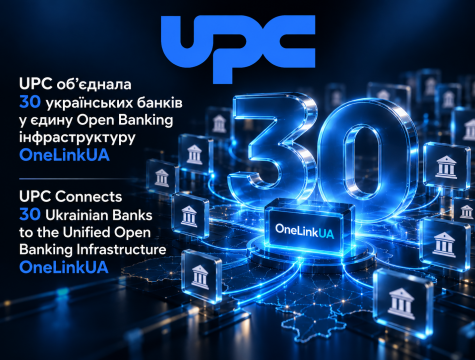
In Ukraine, UPC has launched the first Open Banking platform, enabling integration between banks and third-party providers into a unified payment infrastructure. This gives businesses the ability to quickly adapt to new solutions on the market.